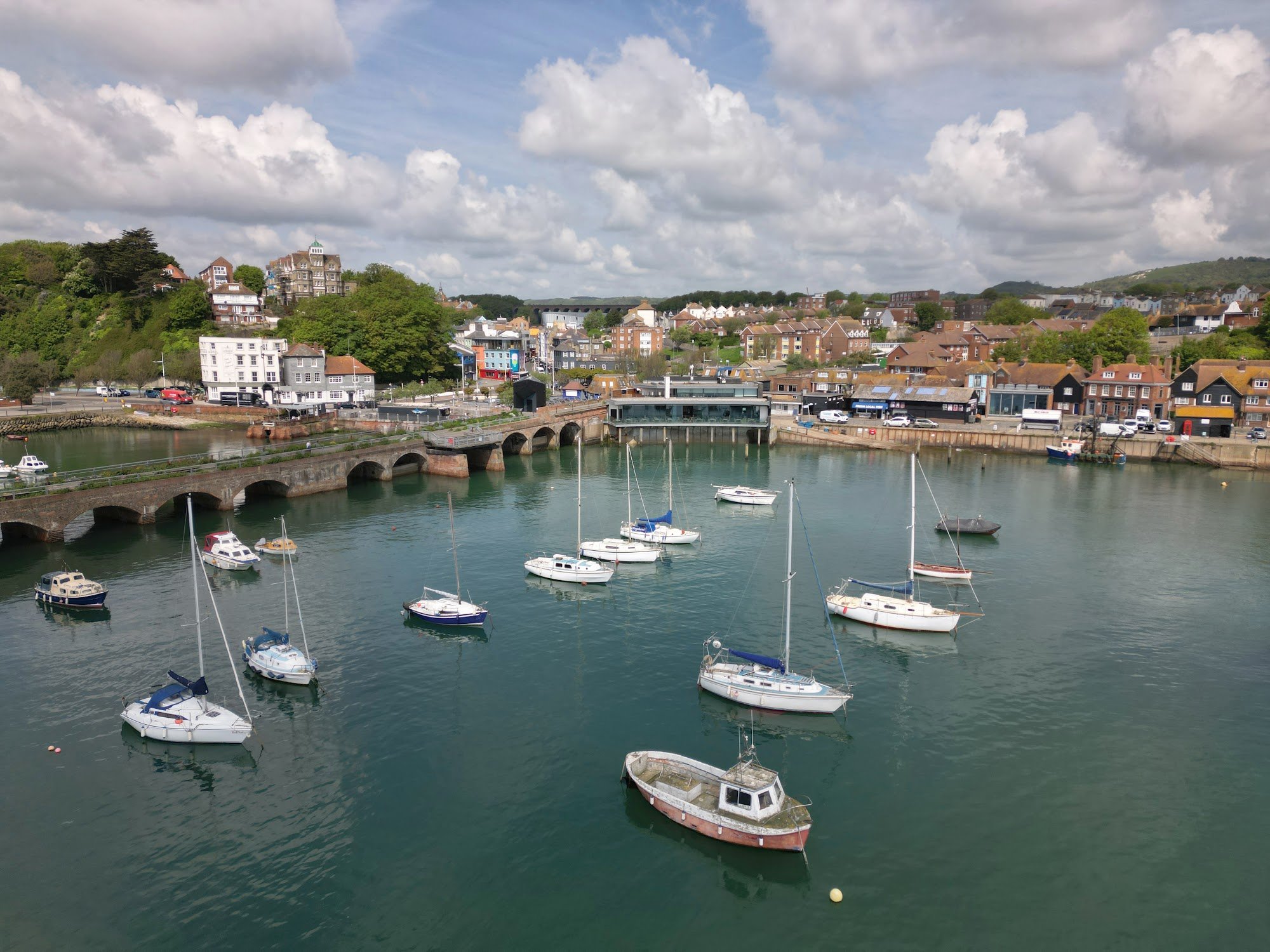
Every few months a national paper runs a piece about Londoners swapping the city for Folkestone. They tend to mention the same three things: the fast train, the art, and the harbour. All true - but none of it tells you what it's actually like to run your own business or work remotely from here. This guide does. It covers the commute, where to work, who to meet, what it costs and, because we live here too, the bits that still need work.
We've linked to the sources throughout, so if you're weighing up a move you can check the numbers yourself. Figures were correct at the time of writing (September 2026) and we'll keep them updated.
1. Why Folkestone? The 60-second pitch
Folkestone is a town of about 110,000 people (district-wide) on the Kent coast, an hour from central London on High Speed 1, 35 minutes from France on Le Shuttle, with a beach, a clifftop promenade and a creative quarter that's been quietly rebuilt over 20 years. House prices are roughly a third of London's. It is not Brighton and it doesn't want to be - it's smaller, cheaper, less polished and, for a lot of people who work for themselves, a better place to get things done.
The 2021 Census showed the district's population grew about 6% in a decade, one of the fastest rates in Kent, and estate agent Hamptons has repeatedly put Folkestone and Hythe among the top destinations for people leaving London. You won't be the first person to arrive with a laptop and a plan.
2. The numbers: who works for themselves here
Around 12% of working residents in Folkestone and Hythe are self-employed, in line with Kent and the UK average, according to the 2021 Census. Freelancing here is normal rather than niche. Construction, creative industries, personal services and consultancy are the biggest groups, with a growing cluster of digital, design and media businesses in and around the Creative Quarter.
Home working was around 25% at the Census (taken in lockdown, March 2021) against 31% nationally - lower because a lot of local jobs are in transport, care and retail. The ONS has since found the South East holds the highest hybrid-working rates outside London, with coastal towns on fast rail lines seeing the biggest growth. The people moving here are the people this guide is written for.
3. Getting to London and back
Southeastern's high-speed service runs from Folkestone Central and Folkestone West to London St Pancras in around 53-57 minutes on the fastest trains, via Ashford, Ebbsfleet and Stratford. Trains are roughly every half hour at peak and the last one back leaves St Pancras around 11pm on weekdays. Folkestone West adds three or four minutes and has more parking.
If you're going in two or three days a week, the ticket to know about is the Flexi Season: eight day-passes valid over 28 days, activated on the days you travel, typically around 20% cheaper than buying daily peak tickets. A full season only starts to win at four or five days a week. A peak Anytime Day Return was around £70 in 2025, so it pays to do the sums - fares change every March and September.
In practice: most freelancers we know go up one or two days a week for client meetings and do the rest from here. That's the sweet spot the research on hybrid working keeps landing on, and it's what the train timetable is built for.
4. Getting to Europe
A real advantage if you have clients on the continent. Le Shuttle leaves from Cheriton, on the edge of town, with crossings to Calais in about 35 minutes and up to four departures an hour at peak. Dover is 20 minutes away by car for the ferries. Lille is a realistic day trip; Paris and Brussels are doable with an early start. Eurostar's Ashford stop has been suspended since the pandemic - if it returns, it will be a significant boost for the town.
5. Where to work
Folkestone isn't short of places to open a laptop, but they suit different days and different moods.
- Coworking. The Workshop on Tontine Street is the town's original coworking space - five floors in a former nightclub in the Creative Quarter, with flexible Workbench desks from £65 a month, dedicated Workstations with 24/7 access, £20 Day Passes, meeting rooms, a Virtual Office if all you need is the address, and a free two-hour taster. (Yes, that's us. We'll keep it to one bullet.)
- Creative studios. Creative Folkestone runs around 90 studios and workspaces in restored buildings on the Old High Street and Tontine Street, let at affordable rents to artists, makers and creative businesses, plus the larger Glassworks building at Mill Bay.
- The library. Folkestone Library on Grace Hill has free wifi, desks and PCs. Quiet, central, costs nothing.
- Cafes. The Old High Street and Rendezvous Street have several independents that tolerate laptops on weekday mornings, and a few that politely don't at busy times. Steep Street Coffee House, the book cafe halfway up the Old High Street, is the best known; Django's on Rendezvous Street and Brew on Cheriton Road are also worth a try. Buy something, don't hog a four-seater, and pack up when it gets busy - the cafe etiquette here is friendly but real.
- Outside. The Harbour Arm and the Leas are lunch and phone-call spots rather than places to work - mobile signal is good, wifi mostly isn't.
In practice: most people settle into a mix - a base for focused work, a cafe for a change of scene, and somewhere with a sea view for calls.
6. Where to meet a client
For a proper sit-down, a bookable meeting room in the town centre beats a noisy cafe (ours start at £20 an hour). For lunch you want to impress with, Rocksalt on the harbour has been the go-to since 2011. The hotel lounges on the Leas - The Grand and The Burlington - are quiet for a coffee, and in summer the Harbour Arm traders make an informal catch-up feel like a treat rather than a meeting.
7. Finding your people
Working for yourself is lonelier than most people expect, and the fix is usually other people who do the same (there's real science behind that). Folkestone has more of them than a town this size should. The FSB and Kent Invicta Chamber both run events in and around town; there are BNI chapters in the district; Code Harbour brings the tech crowd together monthly; and Creative Folkestone's network runs through the whole Creative Quarter. Most coworking spaces, ours included, run coffee mornings and socials that are open to non-members.
In practice: go to one thing a month for three months. By the third you'll know half the room.
8. Free help when you need it
There's more support than most freelancers realise. The Kent and Medway Growth Hub offers free, government-funded advice to any Kent business, sole traders included. Folkestone and Hythe District Council runs its own business support and has administered grant schemes for local businesses. Start Up Loans offers government-backed loans up to £25,000 for new businesses, and the Kent Foundation supports entrepreneurs under 30. It isn't glamorous, but it is free.
9. What it costs to live here
Land Registry data put the average house price in Folkestone and Hythe at around £340,000-£360,000 in 2025, against over £520,000 for London - with flats from around £190,000 and terraces around £300,000. Average private rents were around £1,050-£1,150 a month according to the ONS, roughly half a typical London rent.
Add a Band D council tax bill of around £2,200-£2,300 a year, town centre parking at roughly £6-£8 a day (with season tickets if you drive in regularly), and full-fibre broadband available to most of the town - check your postcode before you commit to a house, because the rural fringes are patchier.
In practice: a London day rate goes a long way here. That's the whole reason the trains are full on a Tuesday morning.
10. Life after 5pm
Sunny Sands is a proper sandy beach at the harbour end, with a year-round sea-swimming crowd who'll happily talk you into it. The Harbour Arm does food, drink and music on the old pier through the summer. The Leas gives you a flat clifftop run or walk, the restored Leas Lift takes you down to the coastal park, and the Kent Downs and the white cliffs are on the doorstep. Every three years the Folkestone Triennial fills the town with art, and around 70 pieces stay behind permanently. F51, the world's first multi-storey skate park, is on Tontine Street. Members' Workshop Card gets discounts with independents around town, and if you want the stranger side of the place, start with 5 things you (probably) didn't know about Folkestone.
11. How to try it before you commit
Don't move on the strength of a Sunday supplement. Come down for a week on a Flexi Season, work a couple of days from a Day Pass or a free taster, have a coffee at a networking event, swim at Sunny Sands if the weather allows, and see how the Tuesday train feels. Folkestone sells itself best in person - and if it doesn't, better to know before the removal van.
Quick answers
How long is the train from Folkestone to London?
Around 53-57 minutes to St Pancras on the fastest high-speed services.
Is Folkestone a good place to live for remote workers?
If you need London one to three days a week, want the coast and a lower cost of living, it's one of the strongest options in the South East. If you need to be in London daily, the cost adds up.
How much is a Flexi Season ticket from Folkestone?
It varies with each fare change - check Southeastern. It gives eight days' travel in 28 and suits two or three days a week.
Where can I work from in Folkestone?
Coworking spaces, Creative Folkestone studios, the library on Grace Hill, and a handful of laptop-friendly cafes on the Old High Street.
Is there business support for freelancers in Folkestone?
Yes - the Kent and Medway Growth Hub, the district council and Start Up Loans all offer free or government-backed help.
The short version
An hour from London, 35 minutes from France, a third of the house price, a beach, a creative scene and enough other freelancers that you won't be working alone unless you want to. Come and see.
Want to try a day here? Book a free tour or grab a Day Pass at The Workshop Folkestone.
Sources
- ONS Census 2021, economic activity (TS066)
- ONS Census 2021, worked mainly from home (map)
- ONS Census 2021, population change, Folkestone and Hythe
- Nomis, Labour Market Profile, Folkestone and Hythe
- Hamptons, London leavers 2024 (January 2025)
- Southeastern, High Speed services
- Southeastern, Flexi Season tickets
- Le Shuttle
- Port of Dover
- Ofcom broadband and mobile checker
- Creative Folkestone, the Creative Quarter
- Folkestone Triennial
- Folkestone Harbour Arm
- Folkestone Seafront (Folkestone Harbour and Seafront Development Company)
- F51
- Folkestone Leas Lift
- Kent and Medway Growth Hub
- Folkestone and Hythe District Council, business
- Start Up Loans (British Business Bank)
- FSB
- Kent Invicta Chamber of Commerce
- HM Land Registry UK House Price Index, Folkestone and Hythe
- ONS, private rent and house prices
- Folkestone and Hythe District Council, council tax
- Folkestone and Hythe District Council, parking
- Kent Downs National Landscape
- Sunday Times, Best Places to Live
- Steep Street Coffee House
- Folkestone Library (Kent Libraries)
- Rocksalt
- The Grand, Folkestone
- The Burlington Hotel
- Kent Foundation